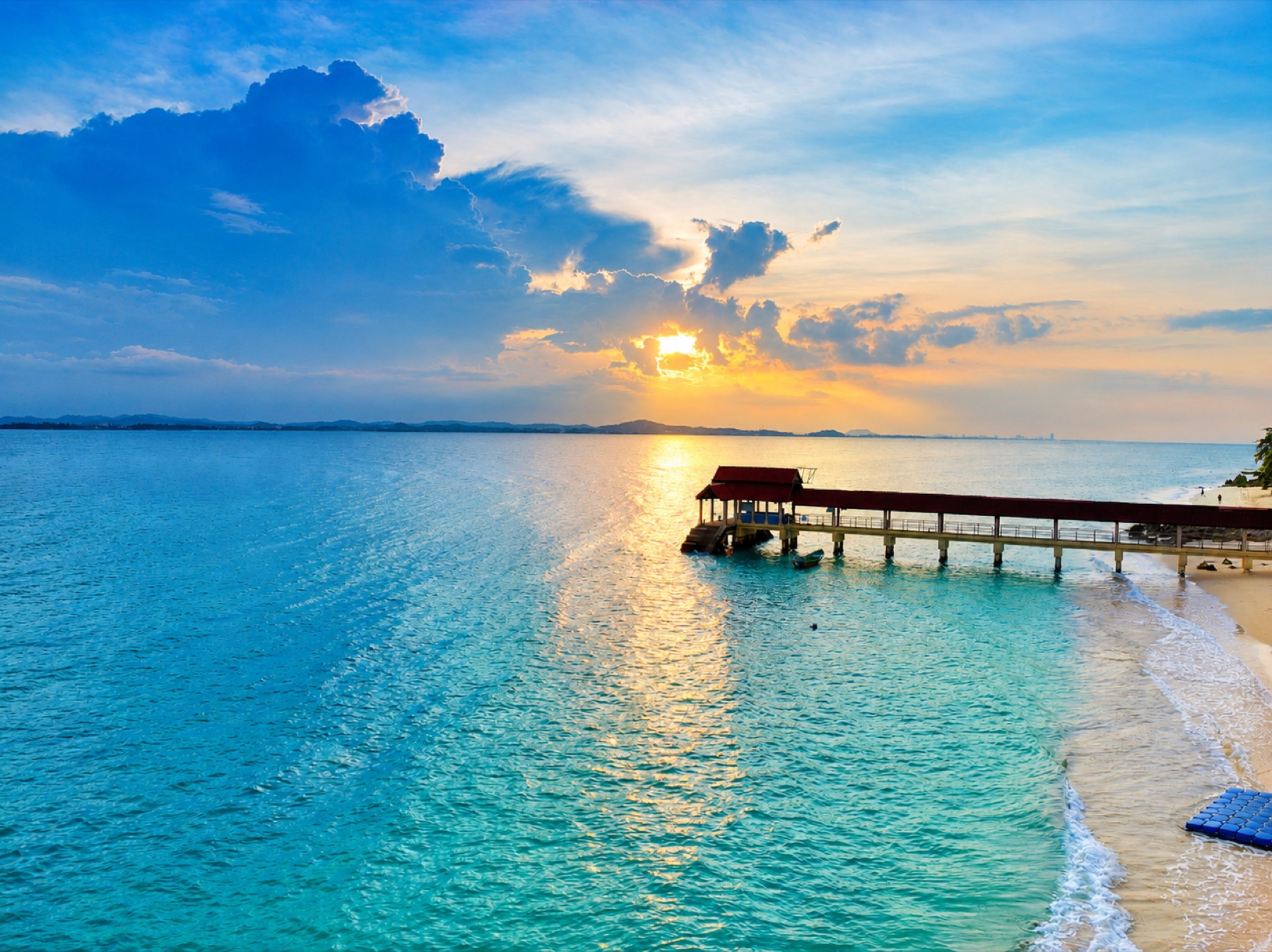
Why Pulau Kapas is Terengganu’s best-kept secret
If you are working out what to do in Terengganu, or where to go beyond Redang and the Perhentian Islands, Kapas is the answer most Malaysians would rather you didn’t find.
It is the closest of Terengganu’s islands to the mainland — six kilometres off Marang, twenty minutes by boat — and by some distance the cheapest. There is no airport transfer, no resort strip, no ferry terminal with a queue an hour deep. You buy a ticket at a counter, step onto a speedboat, and you are on white sand before your coffee goes cold.
What keeps people coming back is how little is asked of them. No roads, no cars, no traffic, and nothing you are obliged to go and see. The whole island is 2.72 km² of protected marine park, and the reef starts a few metres from the beach, so you can snorkel over live coral without booking anything or boarding a boat. Six sheltered bays run down the west coast, and if you walk twenty minutes north of the jetty you can still have one to yourself in August.
It is changing, though. Boutique villas have appeared alongside the backpacker longhouses, the campsites are busier every season, and the island now turns up on “underrated Malaysian islands” lists that it never used to. Kapas has always been Terengganu’s hidden gem. It is not going to stay hidden much longer.
Come if you want clear water, cheap beds, a reef you can swim to, and a few days entirely out of reach of the working week. Think twice if you want shopping, a spa or a dive centre running daily trips — for that, head north to Redang or the Perhentians and pay accordingly.
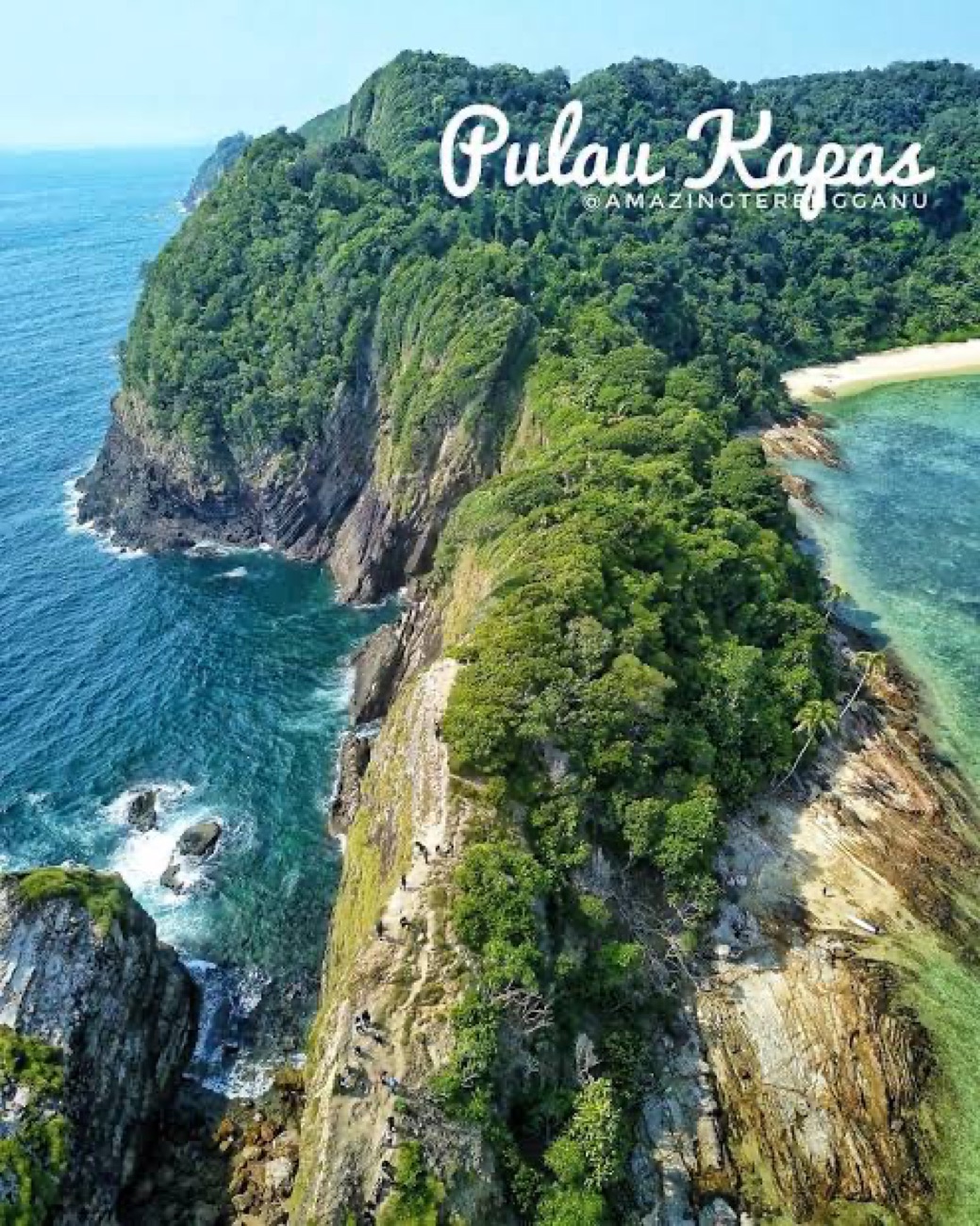
Which island in Terengganu should you choose?
Terengganu has the best islands on peninsular Malaysia’s east coast, and they are not interchangeable. Most visitors fly into Kuala Terengganu and pick from there. This is how they differ.
| Island | Crossing | Character | Best for |
|---|---|---|---|
| Pulau Kapas | 15–20 min from Marang | The smallest of the main islands, and a peaceful one. No roads, no cars, no traffic — six bays and the sea. | Peaceful and family friendly, snorkelling straight off the beach, small budgets |
| Pulau Redang | 45–90 min from Merang | The largest resorts and the biggest crowds, sold mostly as all-inclusive packages. | Families, resort holidays, first-timers |
| Perhentian Islands | 30–40 min from Kuala Besut | Two islands, busy beaches, dive schools and a lively bar strip on Kecil. | Diving, going out, backpackers |
| Pulau Lang Tengah | ~30 min from Merang | Tiny, with only a handful of resorts and no village. | Couples wanting a quiet resort |
| Pulau Tenggol | ~45 min from Kuala Dungun | Steep, rocky and dive-focused, with deeper water close in. | Serious divers |
| Pulau Gemia | Minutes off Kapas | A private islet beside Kapas. Its resort has closed, so it is a snorkel stop rather than a stay. | A half-day trip from Kapas |
Why Kapas is so peaceful
The others grew. Redang built resorts big enough to need their own jetties; the Perhentians built a bar strip. Kapas never did — there is no village on the island, no road to build along, and the whole of it is protected marine park. What you get instead is six small bays, a handful of family-run chalets, and evenings where the loudest thing is the sea.
The honest caveat is the weekend. Kapas is the easiest island in Terengganu to reach, so Saturday brings day-trippers from Marang and Kuala Terengganu. Come midweek and you may have a bay to yourself. Come on a Saturday in July and you will be sharing it.
If you are flying in, Kuala Terengganu is the gateway: Sultan Mahmud Airport is about an hour from Kuala Lumpur, and Marang jetty is a 35–45 minute drive south. That makes Kapas the fastest island to reach of any on this list — wheels down to toes in the sand inside two hours.
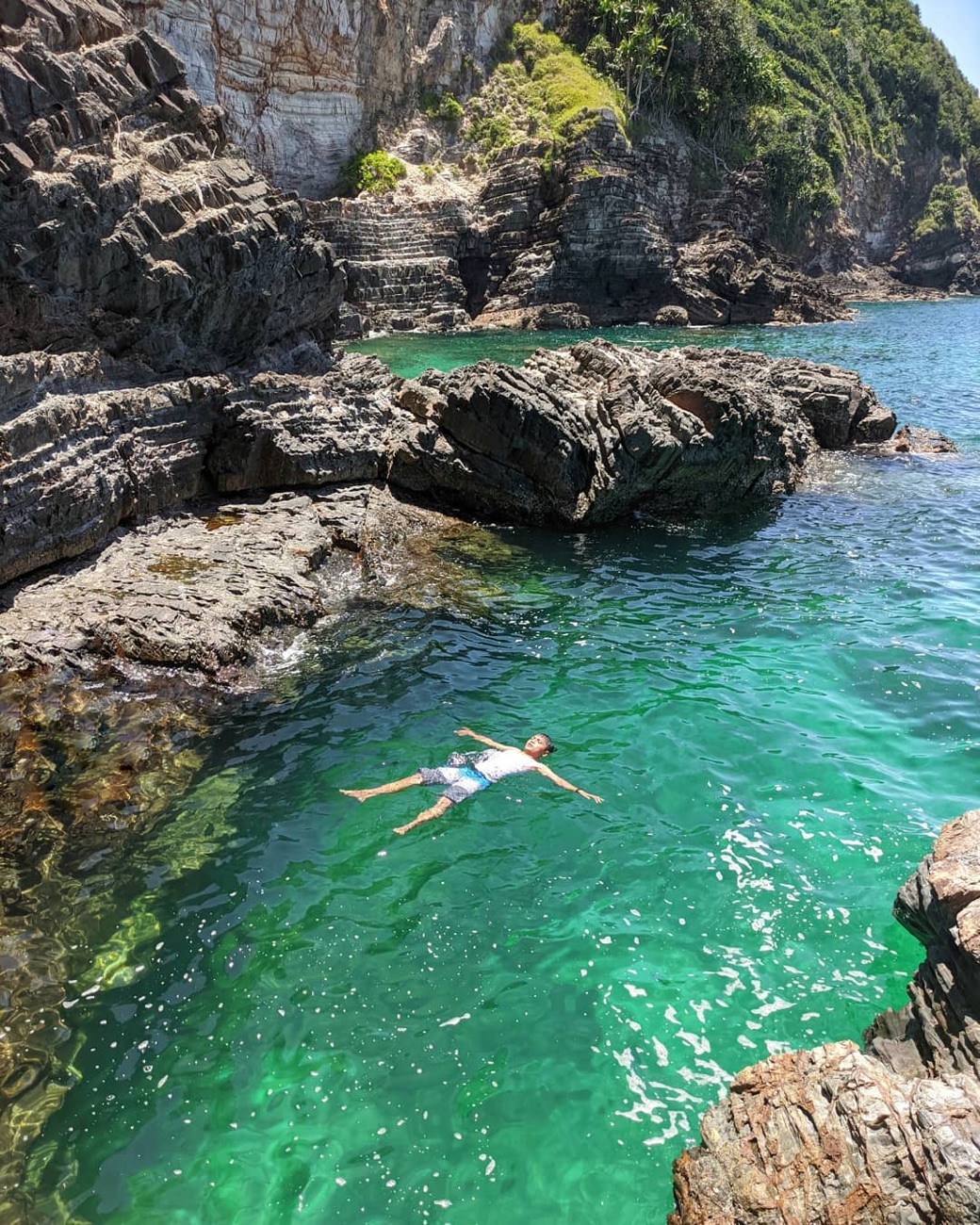
When to go
Kapas is one of the few Malaysian islands that genuinely shuts. The northeast monsoon drives hard into Terengganu’s coast from November, the boats stop running, and almost every resort closes and boards up until March. Getting the month right matters more than anything else on this page.
Picking your week
March rewards early arrivals with the clearest water of the year and an island that still feels empty, though a handful of places open late. April to September is the reliable stretch: hot, dry, flat sea, visibility often 10–20 metres on the reef.
June through August is peak — Malaysian school holidays and the busiest weekends. If you want the island quiet, come midweek, or aim for late April, May or September. By October the swell is building and some operators have already begun to pack up.
Weekends are markedly busier than weekdays year-round, since Kapas is an easy run from Kuala Terengganu and Kuantan. Note too that Terengganu’s weekend falls on Friday and Saturday, and boat schedules thin out on Friday for midday prayers.
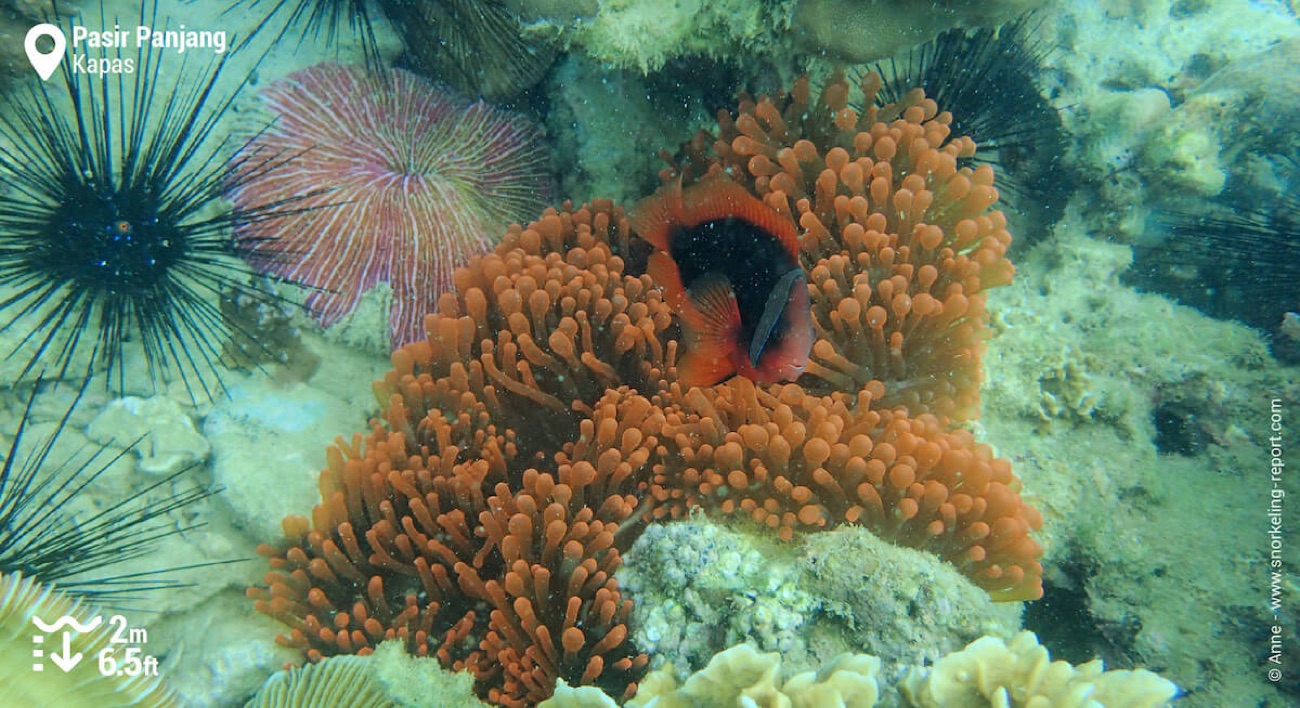
Photo: snorkeling-report.com
Do not book flights around monsoon dates. The closure is weather-driven, not a fixed calendar — some years boats stop in late October, some years they run into November. Confirm directly with your accommodation or the jetty operator before committing to anything in March, October or November.
How to get there
Every route to Kapas ends at the same place: the jetty at Marang, a fishing town on the Terengganu coast. Get yourself to Marang, pay at the counter, and you are twenty minutes from the sand.
-
BY AIR
Fly to Kuala Terengganu, then drive south
Sultan Mahmud Airport (TGG) is about an hour from Kuala Lumpur, with connections from Singapore, Johor Bahru, Penang and Kota Kinabalu. From the airport it is roughly 35–45 minutes by taxi or Grab to Marang jetty. Fastest route by a wide margin.
-
BY CAR
Drive — about 6 hours from Kuala Lumpur
Around 450 km via the Karak Highway and the east coast road through Kuantan and Dungun. From Kuantan it is roughly 2.5 hours north. There is secure paid parking at the jetty, so driving is the easy option for a group with gear.
-
BY BUS
Express coach to Marang or Kuala Terengganu
Overnight coaches run from Kuala Lumpur (TBS) to Kuala Terengganu in 7–8 hours. Some services stop at Marang itself, where the bus station sits about 300 m from the jetty. Otherwise continue to Kuala Terengganu and take a 40-minute taxi back south.
-
BY RAIL
The Jungle Railway, for the scenic route
The KTM east coast line runs to Kuala Lipis and on to Wakaf Bharu near Kota Bharu — a beautiful ride, but it does not serve Marang directly. Treat it as a journey in its own right, followed by a long road transfer south.
Three separate charges get you onto the island, all paid at the counters just before the jetty: the boat ticket, the Marang jetty fee and the marine park conservation fee. The marine park fee is the one that varies — foreign visitors pay six times the Malaysian rate. Keep your ticket stub safe; you need it going home.
| Charge | Adult | Child | Senior | OKU |
|---|---|---|---|---|
| Boat ticket (return) | RM 50 | RM 25 | — | — |
| Marang jetty fee | RM 5 | RM 3 | — | Free |
| Marine park fee — Malaysian | RM 5 | RM 2 | RM 2 | Free |
| Marine park fee — foreign visitor | RM 30 | RM 15 | — | — |
| Jetty parking (per night) | RM 9–11 | — | — | — |
Return trip, per person, excluding parking. Accommodation packages often include the boat — check before paying at the counter.
| Direction | First | Last | Friday |
|---|---|---|---|
| Marang → Kapas | 08:00 | 15:00 | Last boat 13:00 |
| Kapas → Marang | 08:30 | 17:30 | Last boat 13:30 |
Marang, not Merang. Two different towns on the same coast, an hour apart, and people mix them up constantly. Marang is south of Kuala Terengganu and serves Kapas. Merang is north and serves Redang. Check which one your driver is heading for before you set off.
Where to stay
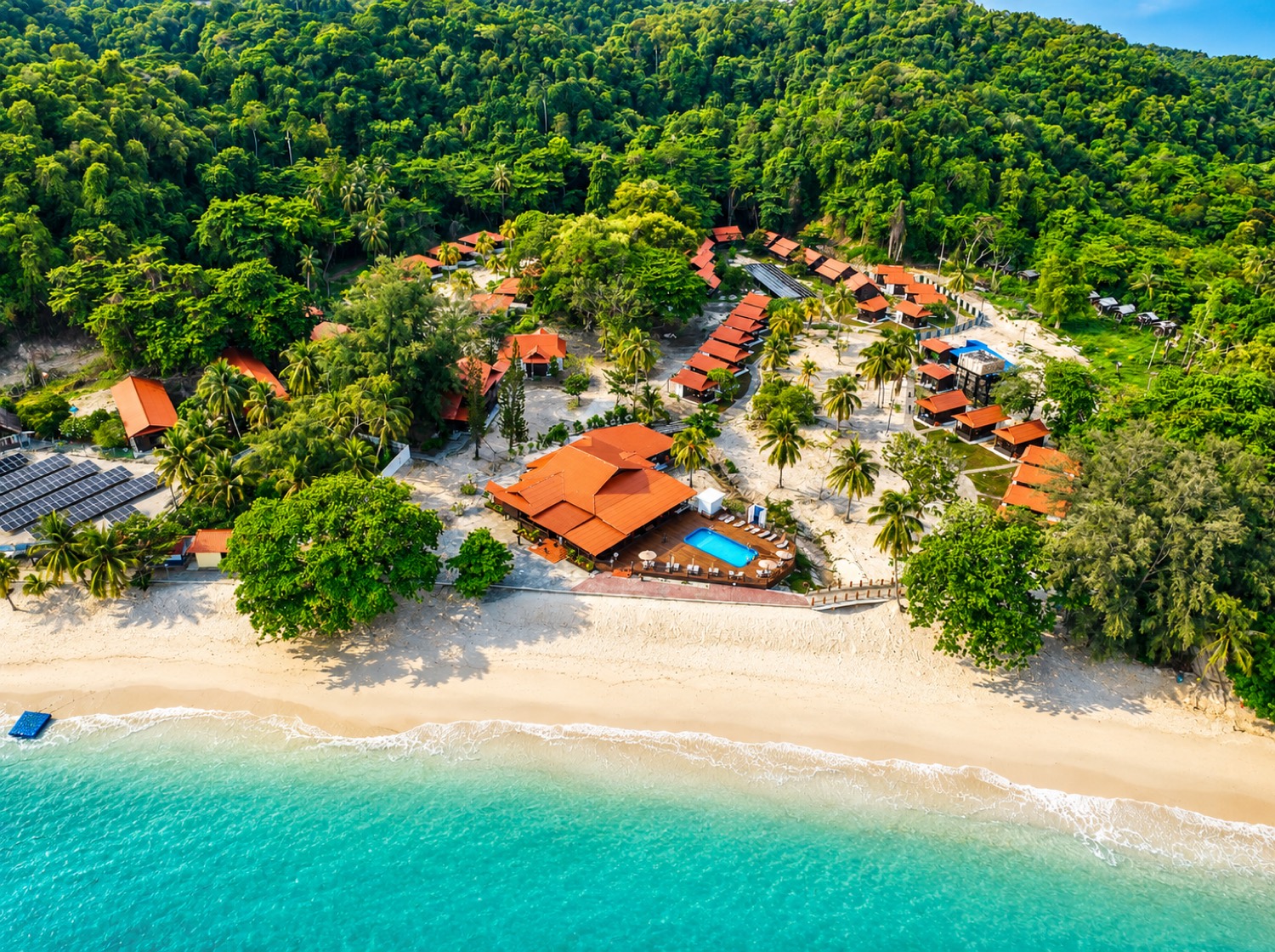
Everything sits along the sheltered west coast, strung between the jetty and the northern headland. No chains, no resort strip — the choice runs from timber villas with a pool down to a tent on the sand, and you can walk between most of them in twenty minutes.
from ~RM 600 / night One property on the island belongs in this bracket.
The Heritage Kapas Island Resort
Handcrafted timber villas strung between the rainforest edge and a calm, snorkel-clear bay. This is the most considered piece of building on Kapas — the only property on the island that reads as designed rather than assembled, from the joinery on the villas to the spacing between them and the planting that screens one from the next.
A pool sits above the sand, with a beachfront restaurant beside it, a watersports centre for masks, fins and kayaks, and a small shop for whatever you forgot to pack. Villas come with air conditioning and hot showers. Guided jungle treks and snorkelling trips run from the property.
- Pool
- Air conditioning
- Hot shower
- Beachfront restaurant
- Watersports centre
- Private boat transfers
~RM 200–400 / night Larger properties with a restaurant on site and more facilities, often sold as packages with boat transfers and meals included.
 Elevated
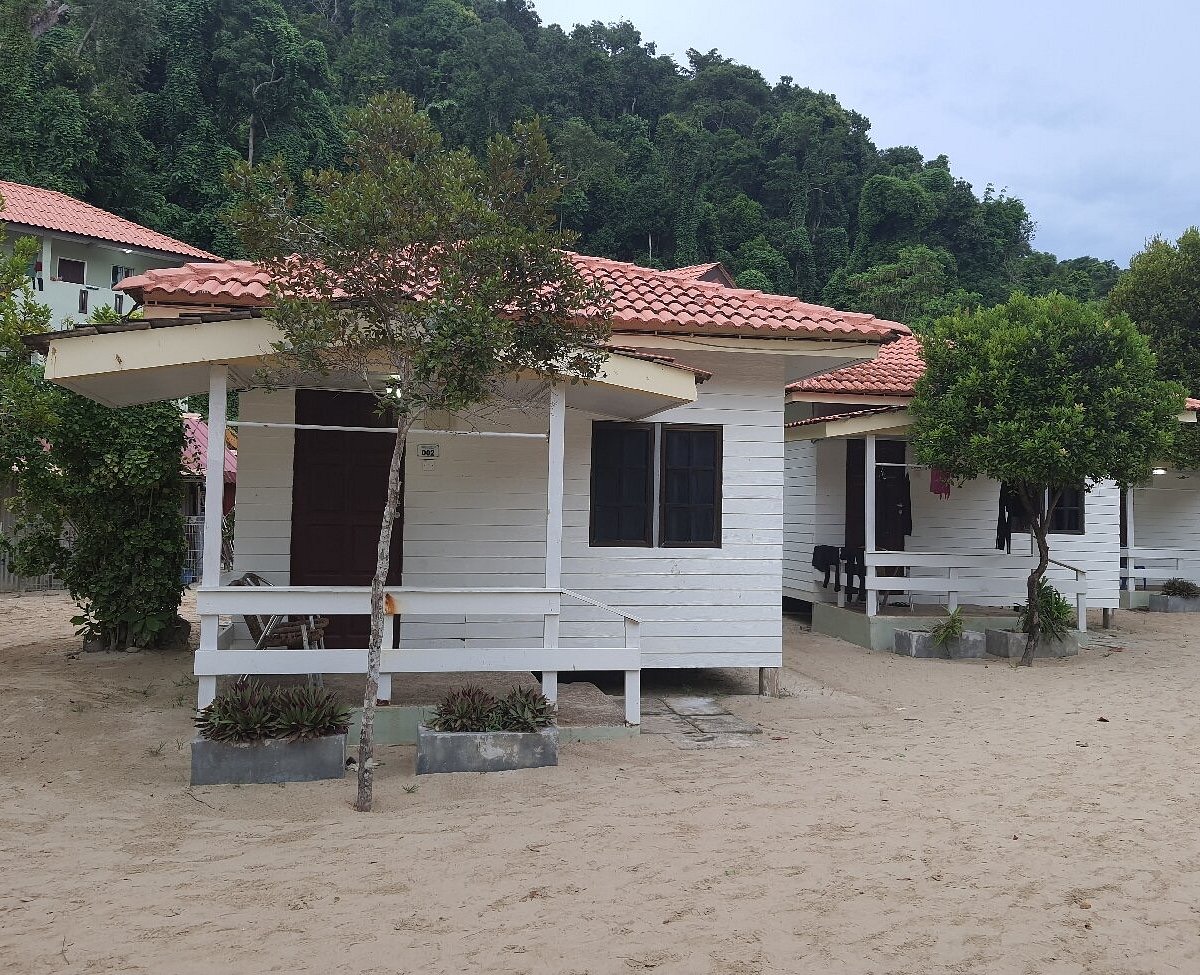
Kapas Coral Beach Resort
Long-running resort with chalets set back behind the treeline and direct reef access out front — one of the better spots to snorkel straight off your own beach.
 Elevated
Ombak Kapas Island Beach Resort
Mid-range beachfront rooms with air conditioning and an on-site restaurant, popular with couples and small families. Central to the main beach, so easy for wandering.
 Elevated
D’Seri Kapas Resort
Comfortable air-conditioned chalets with a restaurant, often sold as a two-day, one-night package with boat tickets and meals bundled in.
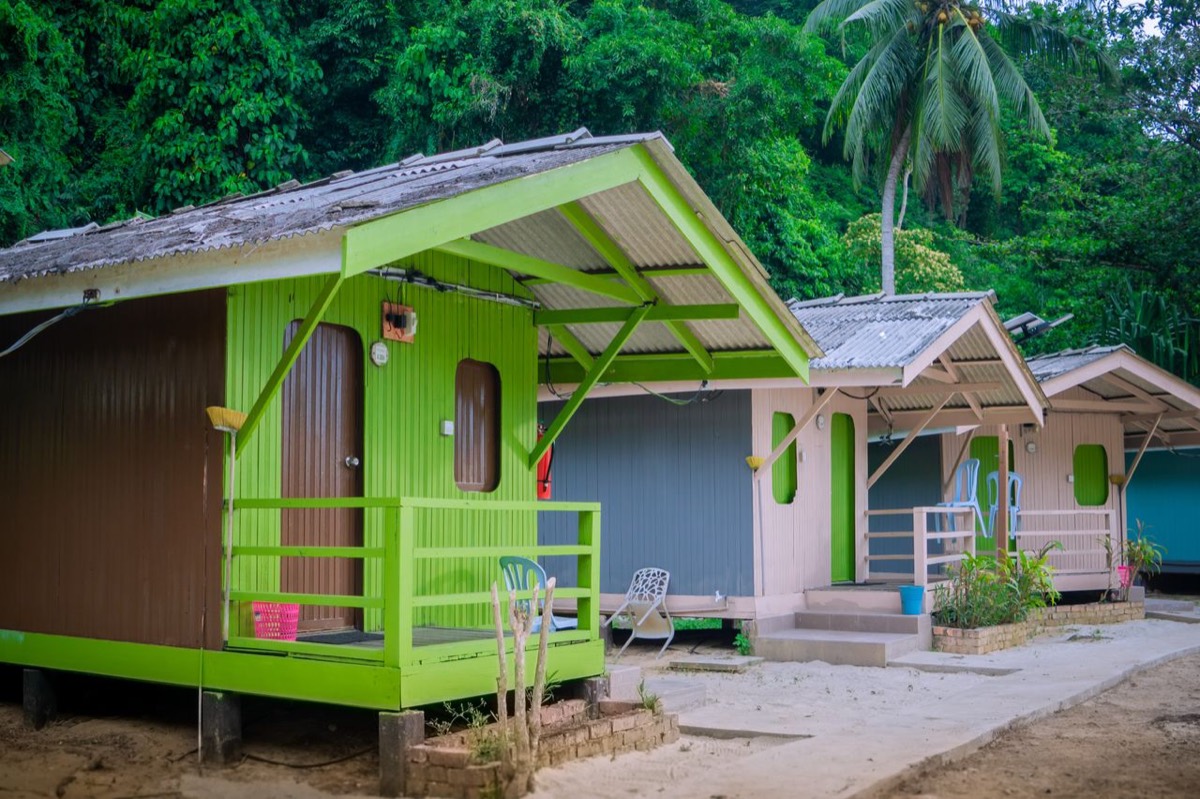
~RM 100–400 / night Smaller, owner-run chalets. Fewer facilities, more character, and you will meet the people who run them.
 Standard
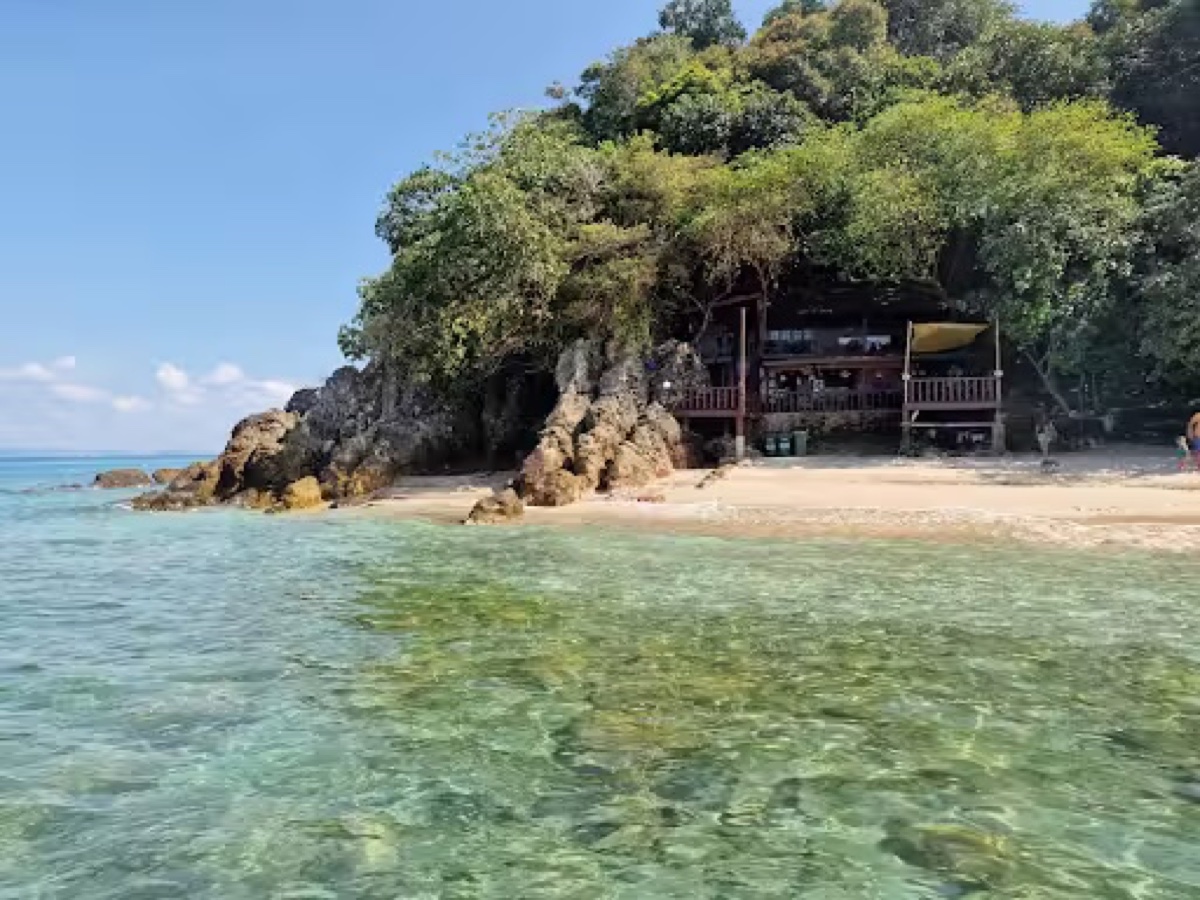
Kapas Turtle Valley
A small, deliberately quiet property in its own secluded bay, run for adults and divers rather than families. Few rooms, books out early, and the snorkelling straight off that cove is among the island’s best.
 Standard
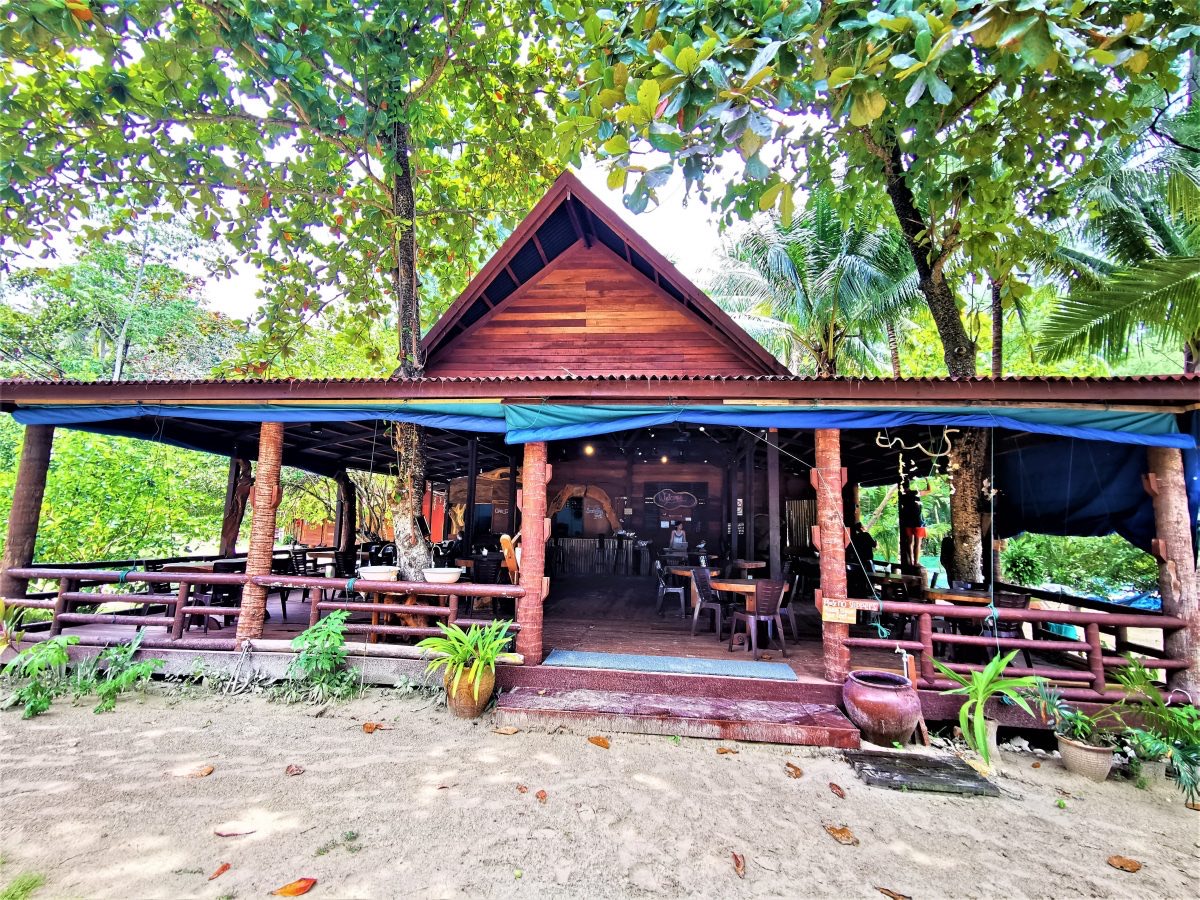
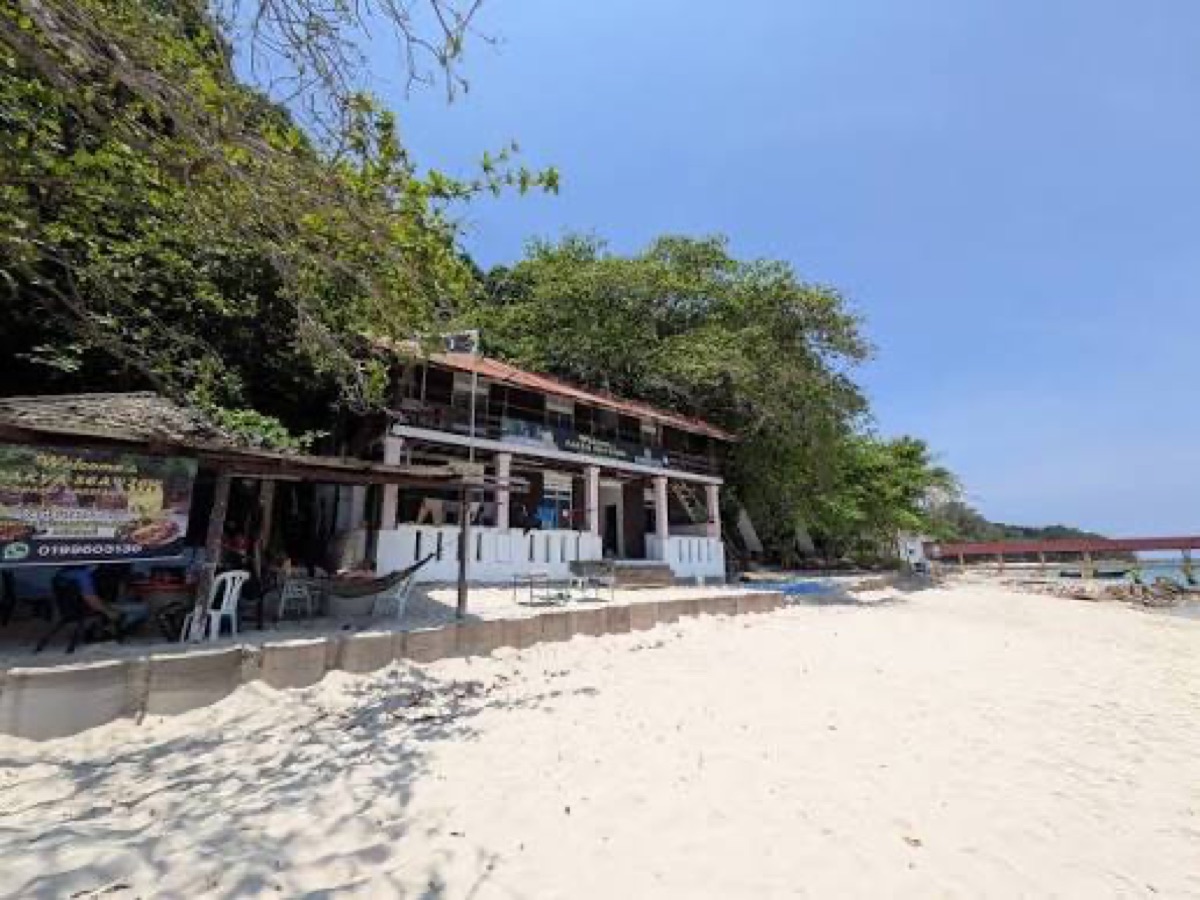
Pak Ya Seaview Cafe & Chalet
Modest rooms above a seafront cafe, at the lower end of this bracket. Worth knowing for the cafe alone, whether or not you sleep there.
 Standard
Mango Chili
The long-standing favourite formerly known as Qimi Chalet, taken over and renamed — so if you have read glowing reviews of Qimi, this is the same beachfront. A wide range, from simple fan chalets at the cheap end up to rooms on a quiet private cove. Relaxed, sociable and consistently good value.
 Standard
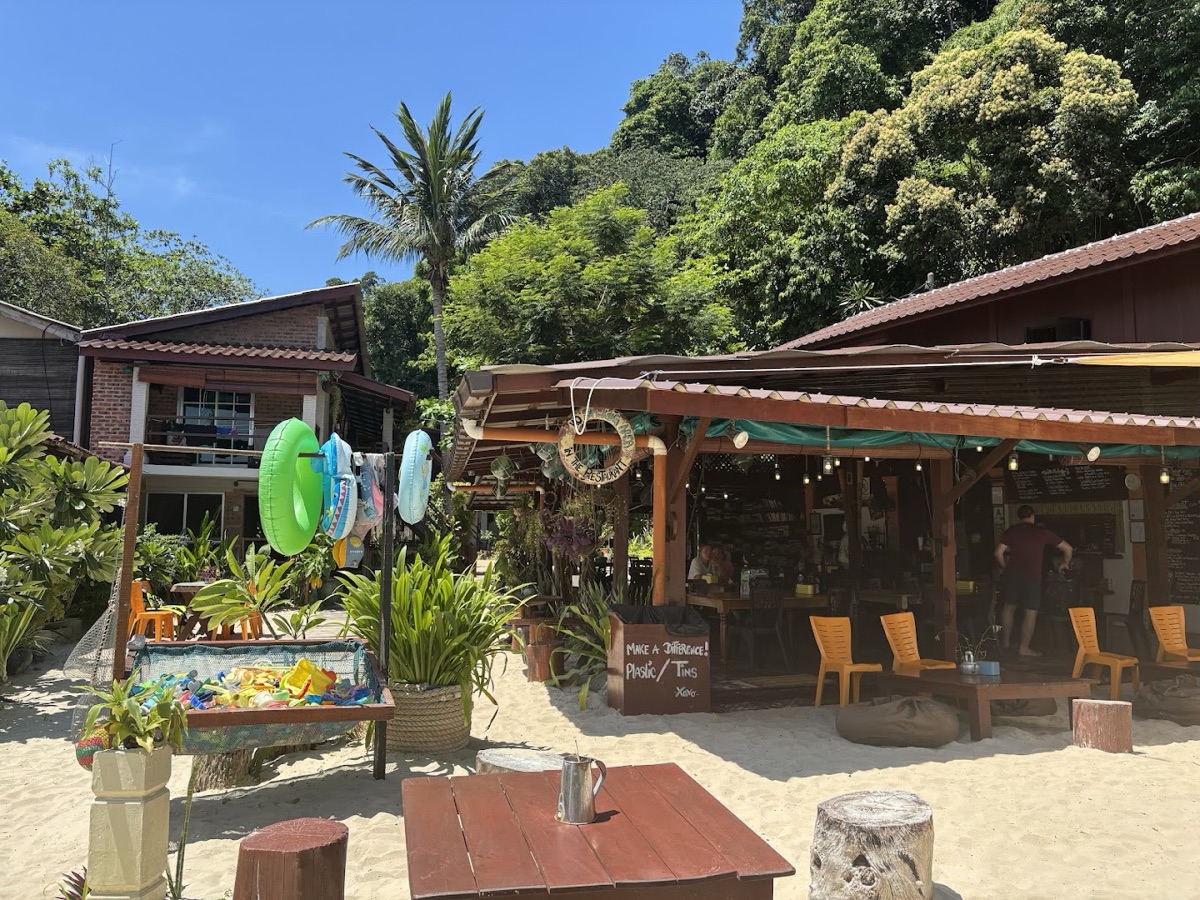
Kapas Boutique Chalet
Wi-Fi, air conditioning, a restaurant and direct beach access at a fair price. A reliable middle option with no particular drama.
~RM 30–120 / night Dorm beds, fan rooms and camping. Shared washrooms, and you are closer to the sand for it.
Captain’s Longhouse
The island’s backpacker institution — dorm beds and simple rooms in a timber longhouse, with a bar and a crowd that talks to each other. Ringgit for ringgit it is the best value on Kapas.
Longsha Campsite
Pitch your own tent or rent one on site, with shared washrooms and a communal cooking area. Steps from the water and a fraction of resort prices.
Bongsai Kapas
Camping on Kapas at the same budget end as Longsha. Contact them directly for pitches, tent hire and current rates — campsites here open and close with the season.
Marang & Kuala Terengganu
Hotel Seri Malaysia Marang and the hotels in Kuala Terengganu make sensible bases if you arrive after the last boat, or want to visit Kapas as a day trip without paying island rates.
Price bands are indicative. Rates swing hard with the season, the day of the week and whether meals and boat transfers are bundled in — a package rate and a room-only rate for the same chalet can differ by half. Treat the figures as a guide to which bracket a property sits in, not a quote.
Book ahead, and book direct where you can. The island has only a few hundred beds in total. June to August weekends and any Malaysian public holiday sell out weeks in advance, and several properties handle reservations by WhatsApp rather than through booking sites. Always reconfirm whether boat transfers and meals are included — on Kapas they very often are.
Things to do
Kapas is a small island and proud of it. The pleasures here are snorkelling, swimming, walking over the hill and doing very little — there is no town, no shopping and no schedule to keep.
- 🤿
Snorkel straight off the beach
You do not need a boat. Fringing reef sits close in along most of the west coast, and the rocky points between the bays hold the best of it — parrotfish, wrasse, clownfish in their anemones, and reef blacktips if you are lucky. Visibility is typically 10–20 m in the dry season. Most accommodation rents masks, fins and vests cheaply.
- 🐢
Take the boat trip to Gem Island
A short hop north to Pulau Gemia, where green turtles are seen regularly. The island’s resort has closed, so you cannot stay or eat there — but the standard half-day snorkel circuit still takes in several reef stops around Kapas and Gemia, and it is usually the highlight of a short stay. Arrange it through your accommodation the evening before.
- 🌅
Trek over the hill for the sunrise
A steep but short jungle path crosses the island’s spine to the wild, unsheltered east coast — rougher water, no facilities, and usually nobody else there. Start early for sunrise, wear proper shoes, and take water; the trail is unsigned in places and slippery after rain.
- 🛶
Kayak the coastline
Calm, protected water on the west side makes this the easiest way to reach the bays you cannot walk to, and to look down at the reef without getting in. Kayaks and paddleboards are rented by the hour at most resorts.
- 🐠
Dive the marine park
Kapas sits inside a protected marine park, with dive sites around the island and out towards Gemia. Operators run when there is demand rather than on a fixed timetable, so contact them before you arrive if diving is the point of the trip.
- 🎣
Fish with the boatmen
Several boat operators take small groups out at dusk for line fishing. It is informal, cheap and genuinely local — and the catch sometimes comes back to be grilled for dinner.
- 🥾
Walk between the bays
You can cover most of the west coast on foot at low tide, scrambling over the rocky headlands between beaches. Time it with the tide, wear something on your feet, and treat it as the island’s best free afternoon.
- ✨
Watch the sky
Minimal lighting and no mainland glow make for a genuinely dark sky. Find a stretch of empty sand after the restaurants close and look up — on a moonless night the Milky Way is plainly visible.
This is a protected marine park. Taking coral, shells or anything living is illegal, as is fishing inside the park zone. Do not stand on coral, do not chase or touch turtles, and use reef-safe sunscreen or a rash vest instead. The reef here is recovering from bleaching and it needs the help.
The beaches
Six sheltered bays face the mainland along the west coast, separated by rocky points you can climb over at low tide. They grade predictably: busiest at the jetty, emptiest at the northern end.
| Where | Character | Best for |
|---|---|---|
| Jetty beach & main bay | The arrival point, with most of the restaurants and the biggest resorts | Convenience, food, day trippers |
| Central bays | The classic Kapas postcard — white sand, palms, shallow turquoise water | Swimming, families, lazy days |
| Northern coves | Smaller, quieter, backed by rock and jungle | Snorkelling, escaping the crowd |
| East coast | Wild and exposed, reachable only over the hill | Sunrise, solitude — not swimming |
The rule is: walk north. Ten minutes in that direction from the jetty and the crowd thins noticeably; twenty and you may well have a bay to yourself, even in August. The trade-off is that the further north you go, the fewer places there are to buy lunch — so carry water and something to eat.
Eating & drinking
There are no shops or supermarkets on Kapas. You eat where you sleep, or at one of a handful of small beach cafes — and that is part of the appeal.
Resort restaurants
Nearly every property serves food, and many sell half-board or full-board packages that work out cheaper than paying per meal. Expect nasi goreng, grilled fish, curries, and a Western menu of varying ambition.
Beach cafes
A few independent spots along the main bay do simple local food, cold drinks and good coffee through the day. Kitchens close early — often by 9 or 10 pm — so do not plan a late dinner.
Eat on the mainland first
Marang and Kuala Terengganu are where Terengganu food really lives: keropok lekor, nasi dagang, satar and nasi kerabu. Build in a meal before you catch the boat.
Alcohol and dress. Terengganu is a conservative state. A few places on Kapas serve beer, but supply is limited and prices are high — if you want a drink, bring your own from the mainland and check first that your accommodation permits it. Swimwear is fine on the beach; cover shoulders and knees at the jetty, in Marang and in restaurants.
Know before you go
A short island with limited infrastructure rewards a little preparation. These are the things travellers most often wish they had known before the boat left.
Cash, more than you think
No ATM on the island and card acceptance is patchy. Draw enough in Marang or Kuala Terengganu for your whole stay, boat trips and tips included.
Reef-safe sunscreen
Or a long-sleeved rash vest, which works better anyway. The equatorial sun is stronger than it feels in the sea breeze.
Water shoes or sandals
The headlands between bays are sharp rock, and some entries are stony. Worth their space in the bag.
A torch or headlamp
There is little to no street lighting. Getting back along the beach after dinner is much easier with one.
Insect repellent
Mosquitoes and sandflies appear at dusk, especially close to the treeline.
A dry bag
The boat ride is short but wet. Phones, cameras and passports should not make the crossing unprotected.
Can I visit Kapas as a day trip?
Yes, and many people do. Take the 8:00 or 9:00 boat from Marang and return on an afternoon service — that gives you five or six hours, enough for a swim, a snorkel and lunch. It is a perfectly good introduction, but the island is at its best in the early morning and late afternoon, once the day boats have gone. If you can manage one night, do.
Which island in Terengganu is peaceful and family friendly?
Pulau Kapas, of the ones you can easily reach. It is the smallest of Terengganu’s main islands, has no roads, no cars and no village, and the whole island is protected marine park. The sheltered west-coast bays are shallow and calm, which makes it a peaceful, family-friendly choice among the Terengganu islands. Redang and the Perhentians are considerably more developed; Lang Tengah and Tenggol are quiet too but harder and more expensive to get to. The caveat with Kapas is weekends, when day-trippers come over from Marang — midweek it is as quiet as the east coast gets. Compare all six islands.
Is there anywhere upscale to stay on Kapas?
One place. The Heritage Kapas Island Resort is the island’s only upscale property — handcrafted timber villas with air conditioning, hot showers, a pool, a beachfront restaurant and private boat transfers from Marang. Everything else on Kapas sits in the elevated, standard or budget brackets, which is part of the island’s appeal but does mean there is no second option at this level. Book well ahead.
Is there Wi-Fi and mobile signal?
Most accommodation advertises Wi-Fi, but it is shared, slow and often unreliable. Mobile coverage exists along the west coast and is patchy elsewhere; Maxis and Celcom generally do best. Treat Kapas as somewhere you will be largely offline and you will enjoy it more.
Is the electricity on all day?
At the larger resorts, yes. Smaller chalets and campsites may run on generators with limited hours, typically switching off overnight. If you need to charge cameras or medical equipment, ask before you book and bring a power bank regardless.
Is Kapas suitable for children?
Very. The west coast bays are shallow, sheltered and calm, the boat crossing is short, and the larger resorts have family rooms and pools. Bring flotation vests for snorkelling — the reef drop-offs come up sooner than you expect.
Do I need to be able to swim to snorkel?
Not confidently. Buoyancy vests are widely rented and the water over the reef flats is shallow. On a boat trip, tell the guide before you get in; they are used to non-swimmers and will keep an eye on you.
How does Kapas compare to Redang or the Perhentians?
Kapas is smaller, cheaper, closer to the mainland and far less developed. Redang and the Perhentians have bigger resorts, more dive infrastructure and a busier social scene, at higher prices and with a longer journey. If you want peace, a short crossing and a low budget, Kapas wins. If you want a full dive holiday with choices, look north.
Is there a clinic on the island?
No. There is no clinic, pharmacy or doctor on Kapas. Bring any medication you need plus a basic first aid kit, including something for coral cuts. The nearest medical care is in Marang, with the hospital in Kuala Terengganu. Travel insurance covering water activities is a sensible precaution.
Can I bring my own tent and camp anywhere?
Camp at one of the established campsites rather than wild camping — you get washrooms, drinking water and someone who knows you are there. Much of the island is protected, and pitching on an empty beach is neither permitted nor comfortable once the sandflies arrive.
How many days should I stay?
Two nights is the sweet spot for a first visit: a full day for the Gem Island snorkel trip, a morning for the sunrise trek, and enough unhurried beach time to justify the journey. Three or four nights suits anyone who actively wants to do nothing.